28 Principles of Liberty
What Are the 28 Principles?
The 28 Principles of Good Government are timeless ideas that inspired America’s Founding Fathers as they established a nation built on liberty, justice, and self-government. These principles teach that freedom flourishes when individuals, families, and communities embrace moral responsibility, limited government, and respect for God-given rights. They provide a framework for understanding not only how America was founded, but also how free societies can continue to prosper.
The 28 Principles
- Good Government is Based on God’s Laws
- A Nation of True and Honest People Will Stay Free and Happy
- To Stay Free, Good and Wise Leaders Should Be Elected
- Religious Liberty Preserves Freedom
- “In God We Trust”
- All Men Are Created Equal
- Government Should Protect Rights, Not Provide Everything
- Our Rights Come from God
- God’s Laws Protect Our Rights
- The People Hold the Right to Govern
- Tyrannical Governments Can Be Replaced
- The United States is a Republic
- The Constitution Places Limits on Government
- People Have the Right to Own Property
- Free Enterprise Creates Prosperity
- The Constitution Divides Government into Three Branches
- Checks and Balances Protect Freedom
- A Written Constitution Preserves Liberty
- Government Should Have Limited Powers
- Majority Rule Must Protect Minority Rights
- Self-Government is the Key to Freedom
- The Rule of Law Preserves Liberty
- Freedom Requires Education
- A Free Nation Must Remain Strong
- America Was Established as a Nation of Peace
- Government Should Protect Families
- Debt Threatens Freedom
- The Constitution Can Bless the Whole World
Who Are These Principles For?
Everyone!
Whether you’re a parent, student, educator, community leader, or simply someone who wants to better understand America’s founding, these principles offer valuable insights into the responsibilities of citizenship and the blessings of liberty.
They are especially meaningful for:
- Families studying together at home
- Homeschool and private school students
- Teachers and youth leaders
- Constitution and civics enthusiasts
- Anyone seeking a deeper understanding of the principles that have influenced America’s system of government
These ideas are not just about history—they encourage thoughtful discussion about character, responsibility, and the role each of us plays in preserving freedom.
How Can I Learn More?
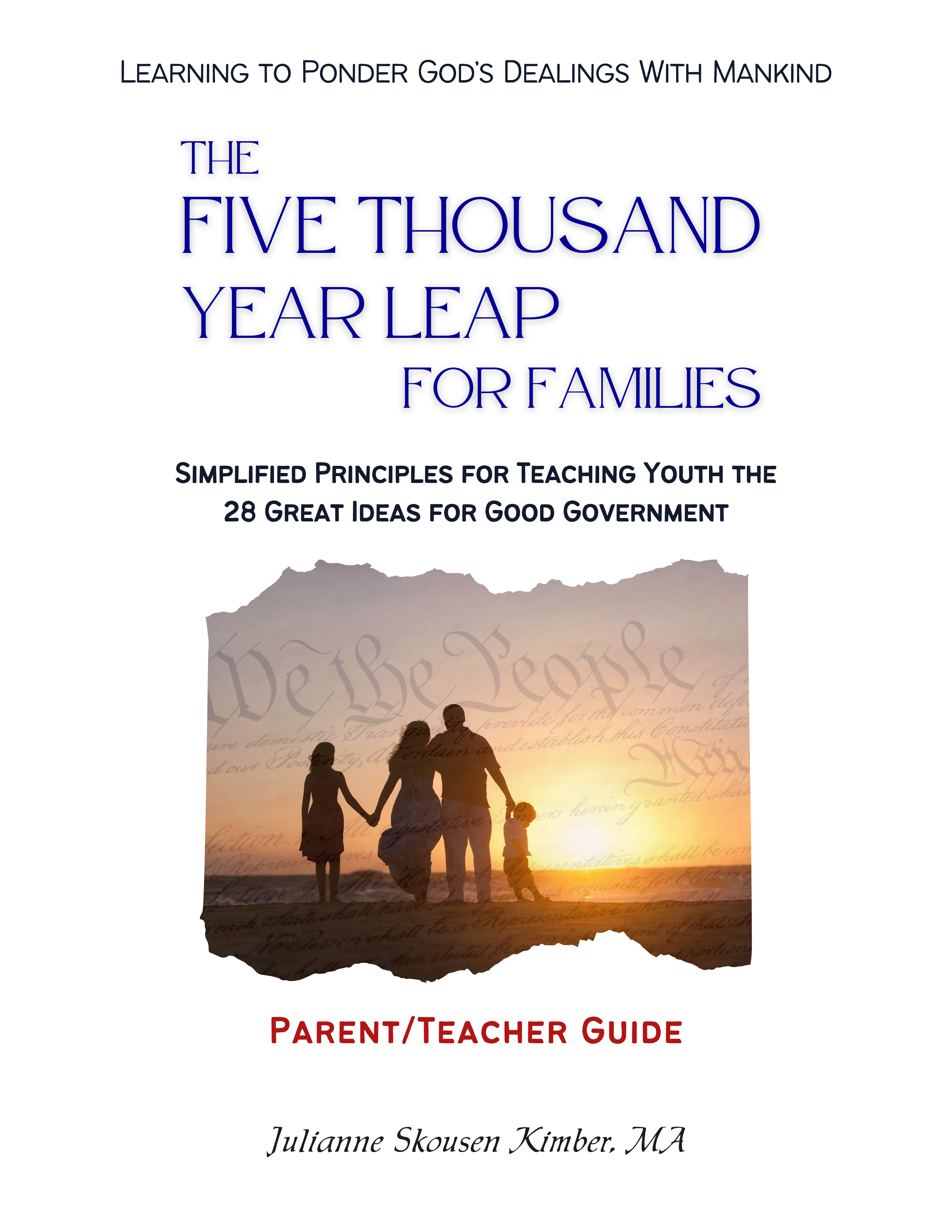
If you’d like to explore each principle in greater depth, The 5,000 Year Leap for Families provides easy-to-understand lessons, engaging activities, discussion questions, and a companion workbook to help individuals and families study these foundational principles together. It is designed primarily for families with children but is valuable for learners of all ages.